
Emanuel Criminal Court Records
A criminal court record is the case file maintained after a charge enters court. In Emanuel County, felony criminal files belong in Superior Court, while misdemeanors and many county traffic-related criminal matters are handled in State Court. The Clerk of Superior Court is the central clerk for Superior, State, and Juvenile Court records, so the clerk's office is the local hub for criminal case copies, docket questions, and certified court records.
Criminal court records differ from arrest records and booking charge records. The sheriff's InterOp jail roster may show a current inmate's charge, warrant number, arresting agency, bond total, and court field, but that roster does not prove conviction or sentencing. For the final court outcome, use the criminal case file, the docket, or the record-holding court.
The Middle Judicial Circuit District Attorney's website is relevant because prosecutor charging decisions shape accusations, pleas, dismissals, and dispositions in Emanuel County criminal cases.
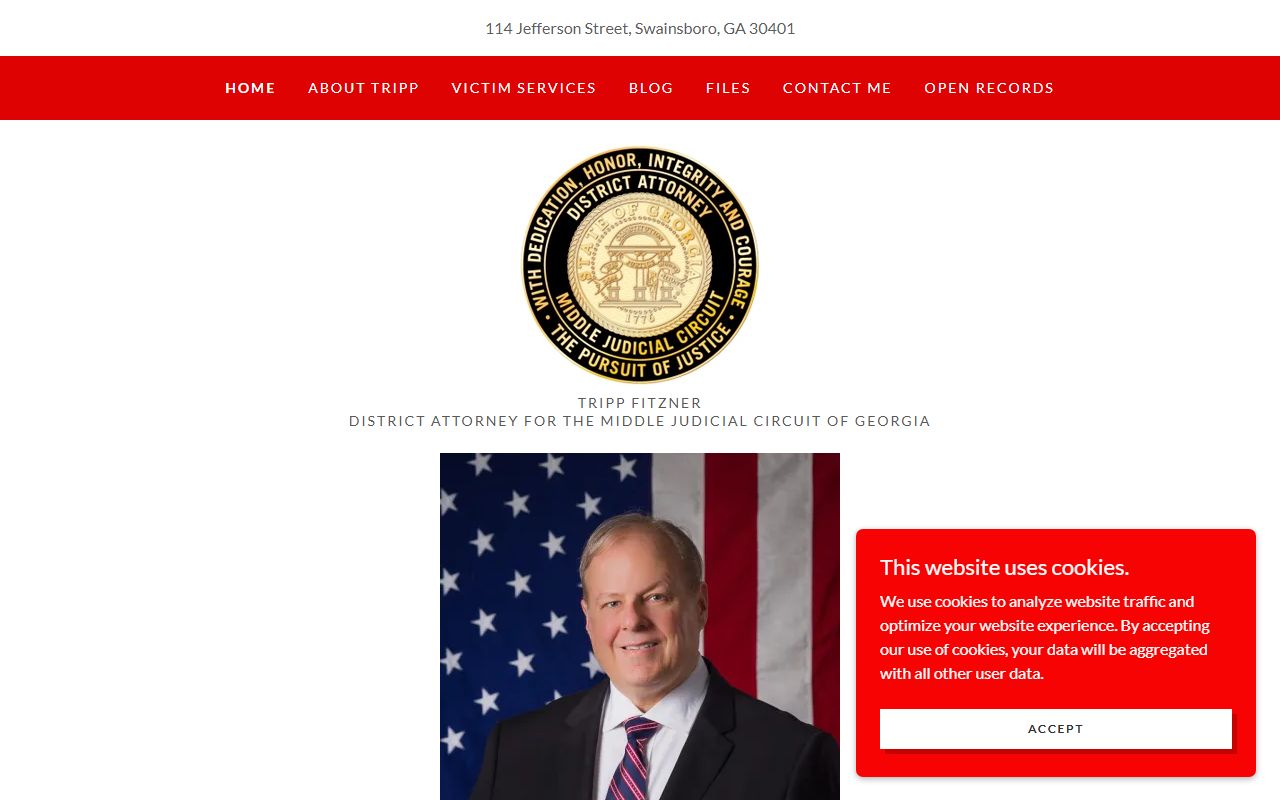
The district attorney source helps connect criminal case records to the prosecution office serving Emanuel County and the rest of the Middle Judicial Circuit.
Search Emanuel Criminal Cases
No open Emanuel County criminal-case search portal was located on the official county site. The documented search path starts with the Clerk of Superior Court for Superior and State Court records, then uses PeachCourt or re:SearchGA when account-based online access is available. Criminal history and record-restriction issues are separate from the case file and may involve the GBI, prosecutor, arresting agency, or court with original jurisdiction.
- Decide whether the matter is a Superior Court felony, State Court misdemeanor, municipal citation, warrant issue, or jail booking record.
- Gather defendant name, case number, charge, warrant number, arrest date, and court name if known.
- Contact the Clerk of Superior Court at 478-237-8911 for Superior and State Court criminal records or certified copies.
- Use PeachCourt or re:SearchGA for account-based Georgia case or document access when the case appears there.
- For custody status or bond clues, check the Emanuel County inmate roster, then confirm final disposition with the court.
For active-warrant concerns, use the warrant records access chain rather than assuming a case search will show every outstanding warrant. The sheriff's bond page notes that failure to appear after release normally leads to rearrest on a bench warrant, and the jail roster can show warrant numbers for booked inmates, but no standalone public active-warrant list was found.
The Georgia Public Defender Council's Middle Circuit page lists the circuit public defender office serving Emanuel County.

Public defender information is part of the criminal-record context because appointed counsel can appear after arrest, charging, arraignment, or later court proceedings.
Emanuel Criminal Case Stages
A criminal case record begins to take shape when charges are filed in the proper court. In felony matters, the Superior Court file may include charges, indictments or accusations, arraignment entries, motions, hearings, jury or trial activity, pleas, disposition, sentencing, probation terms, and bond-related orders. In State Court misdemeanor matters, the file may include accusations or citations, pleas, court dates, disposition, fines, probation, and missed-court consequences.
Case flow: Charges Filed › Arraignment › Pretrial / Motions › Plea or Trial › Disposition › Sentencing
| Stage | What Happens |
|---|---|
| Charging | The case enters court through an accusation, indictment, citation, or other charging document. |
| Arraignment | The defendant is informed of charges and enters or addresses a plea. |
| Pretrial / motions | The docket may show motions, orders, notices, continuances, discovery activity, or hearing settings. |
| Plea or trial | The case moves toward a negotiated plea, bench hearing, jury trial, dismissal, or other disposition. |
| Sentencing | The record may show jail, probation, fines, restitution, bond orders, or other sentence terms. |
What Emanuel Criminal Records Show
Criminal court records show the court's handling of the charge, not just the arrest. A complete file may connect the defendant, charge, statute, bond, docket entries, plea, disposition, sentence, and probation terms. Jail roster data can supply useful clues, including arresting agency, warrant number, bond total, and court field, but the court record is the source for final criminal case outcome.
| Field | What It Shows |
|---|---|
| Case number | Court-assigned identifier; roster warrant numbers may not match final court case-number formats. |
| Defendant | The person charged in State Court, Superior Court, municipal court, or another listed court. |
| Charge / statute | Offense description, O.C.G.A. reference, misdemeanor or felony marker, and count information when available. |
| Plea | The defendant's formal answer, such as guilty, not guilty, or another plea entry. |
| Docket entries | Motions, hearings, continuances, orders, notices, trial activity, sentencing entries, and returns. |
| Disposition | Outcome such as dismissed, guilty, not guilty, nolle prosequi, dead docket, transferred, closed, sentenced, or probation. |
| Bond | Cash, surety, property, no-bond, total bond, or other release conditions where recorded. |
| Redactions | Juvenile details, sealed information, restricted criminal history, and personal identifiers may be withheld. |
Charges vs Convictions
A charge is an accusation or filed count. A conviction is an outcome after a guilty plea, verdict, or other qualifying adjudication. Emanuel County jail roster entries and court dockets may show charges that were later dismissed, amended, dead docketed, transferred, or resolved without conviction. For that reason, charge records should be read alongside the final disposition in the court file.
| Charge | Conviction | |
|---|---|---|
| Stage | Accusation | Verdict or plea |
| Burden of Proof | Probable cause | Beyond reasonable doubt |
| Record meaning | Case or booking allegation | Final or adjudicated outcome |
| Where to confirm | Jail roster, warrant, accusation, indictment, or docket | Court disposition, sentence, or certified case copy |
Read Dispositions and Sentences
Disposition terms identify how a charge or case ended. The research identifies outcomes such as dismissed, guilty, not guilty, nolle prosequi, dead docket, transferred, closed, sentenced, and probation. Sentencing entries may include jail time, probation terms, fines, restitution, or bond-related orders. State Court misdemeanor files may also show fines, probation, and bench-warrant consequences for missed court dates.
Bond information has its own local context. The sheriff's bond page says bond can be made day or night for bondable offenses, cash bonds are returned by Clerk Kristin Hall after a request form with state ID, and property bonds require qualifying Emanuel County real estate. If a person fails to appear after release, the sheriff's research notes that rearrest on a no-bond bench warrant is a normal consequence.
Georgia Record Restriction
Georgia does not use old-style expungement language for many current criminal-history access issues. The state term is record restriction, and GBI guidance explains that O.C.G.A. 35-3-37 allows eligible criminal-history records to be restricted for non-criminal-justice purposes. That can limit public access but does not necessarily erase all internal law-enforcement or court history.
| Sealed | Record Restricted | |
|---|---|---|
| Visibility | Hidden or limited by court order or law | Limited for public non-criminal-justice access when eligible |
| Where to start | The court with jurisdiction or the clerk for filing procedure | Prosecutor for many post-July 1, 2013 arrests; arresting agency for older arrests |
| Examples | Juvenile, adoption, sealed criminal, or sensitive filings | Eligible arrests, dead-docket charges, reversed or vacated cases, or other qualifying outcomes |
The GBI record-restriction page is the state source for Georgia's criminal-history restriction process.
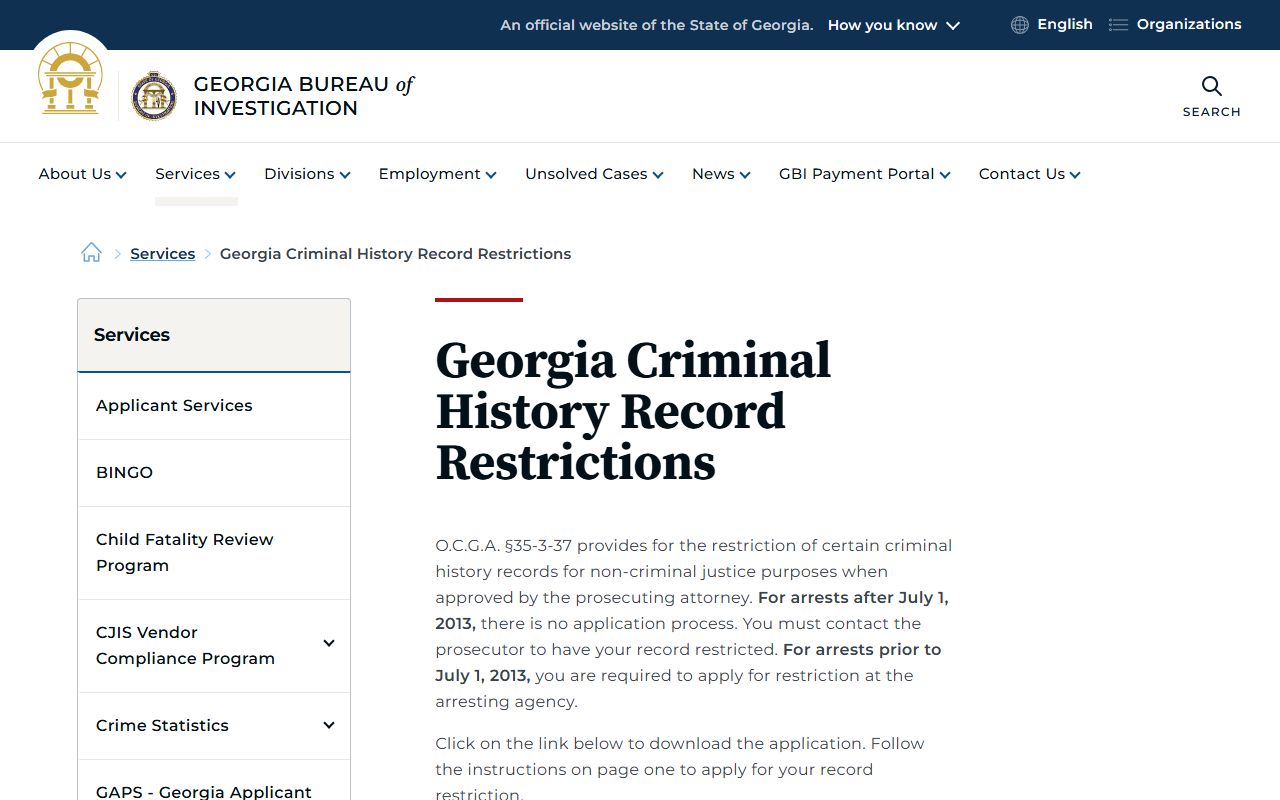
That process is separate from ordinary court-record lookup and may require prosecutor, agency, or court action depending on the arrest date and outcome.
Public Criminal Record Access
Georgia's public-record framework supports access to public court and agency records, but it does not make every criminal record public in full. O.C.G.A. 50-18-70 states the broad presumption of inspection for government records. O.C.G.A. 50-18-72 lists exemption categories, and O.C.G.A. 35-3-37 governs criminal-history record restriction.
Key Statutes:
O.C.G.A. 50-18-70 - Georgia's public-record access presumption.
O.C.G.A. 35-3-37 - Georgia criminal-history record restriction rules.
O.C.G.A. 35-3-37 is the statute source for criminal-history restriction in Georgia.
The statute is useful for restriction research, but eligibility and filing details still depend on the prosecutor, arresting agency, and court record involved.
Background Check Limits
Court-record lookup is not the same as a regulated employment, tenant, credit, insurance, or licensing background check. Emanuel County court records may be incomplete online, may require clerk certification, and may omit restricted, sealed, juvenile, or redacted information. A casual search may also show a charge without the final disposition unless the case file is reviewed carefully.
Important: Do not use casual court-record lookup as a substitute for an FCRA-compliant consumer report.
The U.S. Attorney's Office for the Southern District of Georgia is relevant when a criminal matter is federal rather than an Emanuel County case.
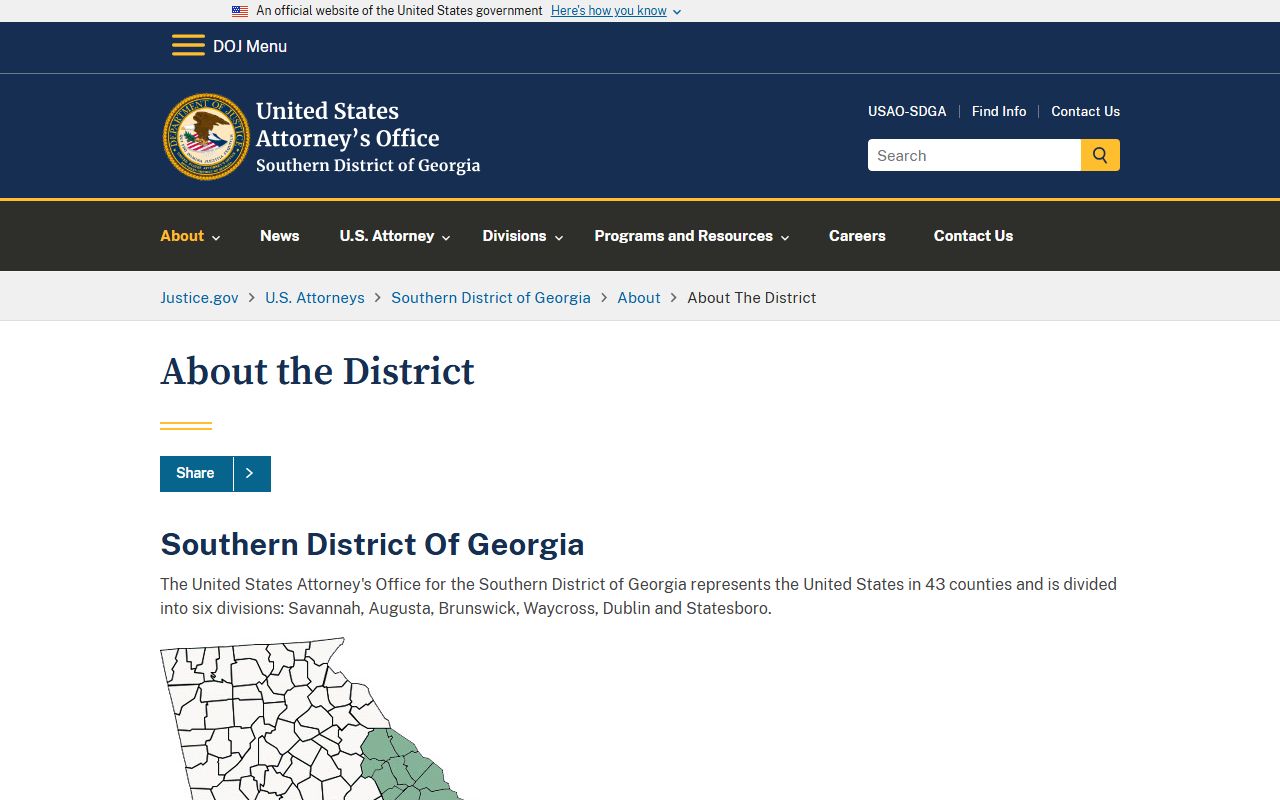
Federal criminal files are not kept by the Emanuel County clerk; use federal court and PACER channels for those records.
Restricted Emanuel Criminal Records
Juvenile cases are not ordinary public criminal dockets, even though the Clerk of Superior Court serves Juvenile Court. Sealed criminal files, active-investigation material, restricted criminal history, protected personal identifiers, and certain family or victim information may be withheld or redacted. Adoption files and Probate Court commitment records can also be restricted, even when connected to broader court history.
For an Emanuel County restriction issue, first identify the arresting agency, prosecutor, court, and date of arrest. Post-July 1, 2013 arrests generally start with prosecutor review under GBI guidance. Older arrests begin with the arresting agency. Court sealing or restriction petitions may need to be filed in the court with original jurisdiction, especially for misdemeanor-conviction restriction, dead-docket charges, or vacated and reversed outcomes.